


How Industrial Pressure Regulators Work?
Interested in knowing how pressure regulator works? This is the blog post for you.
Industrial pressure regulators play a key role in process control by maintaining consistent pressure. Whether you’re designing a steam system, selecting equipment for a chemical reactor, or managing pressure in a gas line, understanding how a pressure regulators work helps you make more informed decisions.
In this guide, we’ll explain the basic force-balance principle that allows a regulator to operate without the need for power, instrument air, or any electronic or pneumatic control devices, along with key internal components and how they work together to control pressure effectively.
What is a Regulator?
A regulator is a classic force balance machine. Two forces are set up in opposition, and as the balance between them changes, different actions occur.
A regulator consists of four main components: a set screw, spring, diaphragm, and valve plug.
The spring and the diaphragm represent the two opposing forces, downward and upward forces, respectively and the valve plug acts on the balance between the two.
Already know your application? Browse Jordan Valve’s industrial pressure regulators product line.
Now, let’s understand how a pressure regulator works.
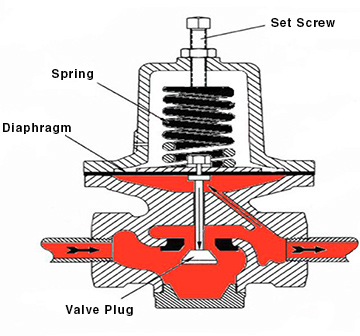
Force Balance Principle
The operation of a pressure regulator can be broken down into the following sequential phases.
Phase 1: Setting the Desired Pressure
We use the set screw to set the regulator at the desired pressure by rotating it to compress the spring.
Phase 2: Valve Opening and Pressure Build-Up
A compressed spring generates a downward force, which opens the valve plug and results in more flow.
As the flow builds downstream pressure, that pressure acts as an upward force on the diaphragm.
This upward force balances the downward force of the spring. The valve plug stops moving toward open, and the flow and the pressure are now balanced.
Phase 3: Decrease in Demand and Valve Closing
When the downstream demand for flow decreases causing more pressure to build in the downstream line. This will upset our force balance.
The increased downstream pressure will exert more upward force on the diaphragm, causing the plug to move toward the closed position.
Phase 4: Restoring Pressure Balance
As the diaphragm continues to move upward, the spring is being further compressed, and the downward force it exerts increases.
Once the downward force from the spring equals the upward force from the diaphragm, we are now back in the force balance condition, and the flow and the pressure are now balanced once more.
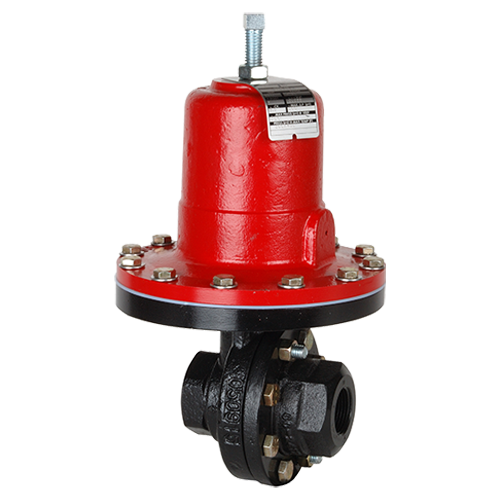 Pressure Reducing Regulators
 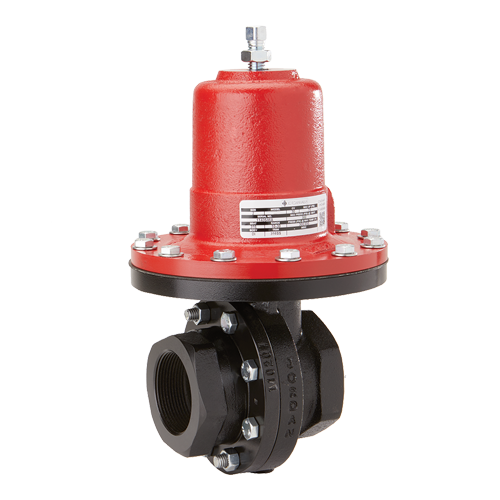 Back Pressure Regulators