


What To Know About Regulators
A basic understanding about industrial pressure regulators. Read on!
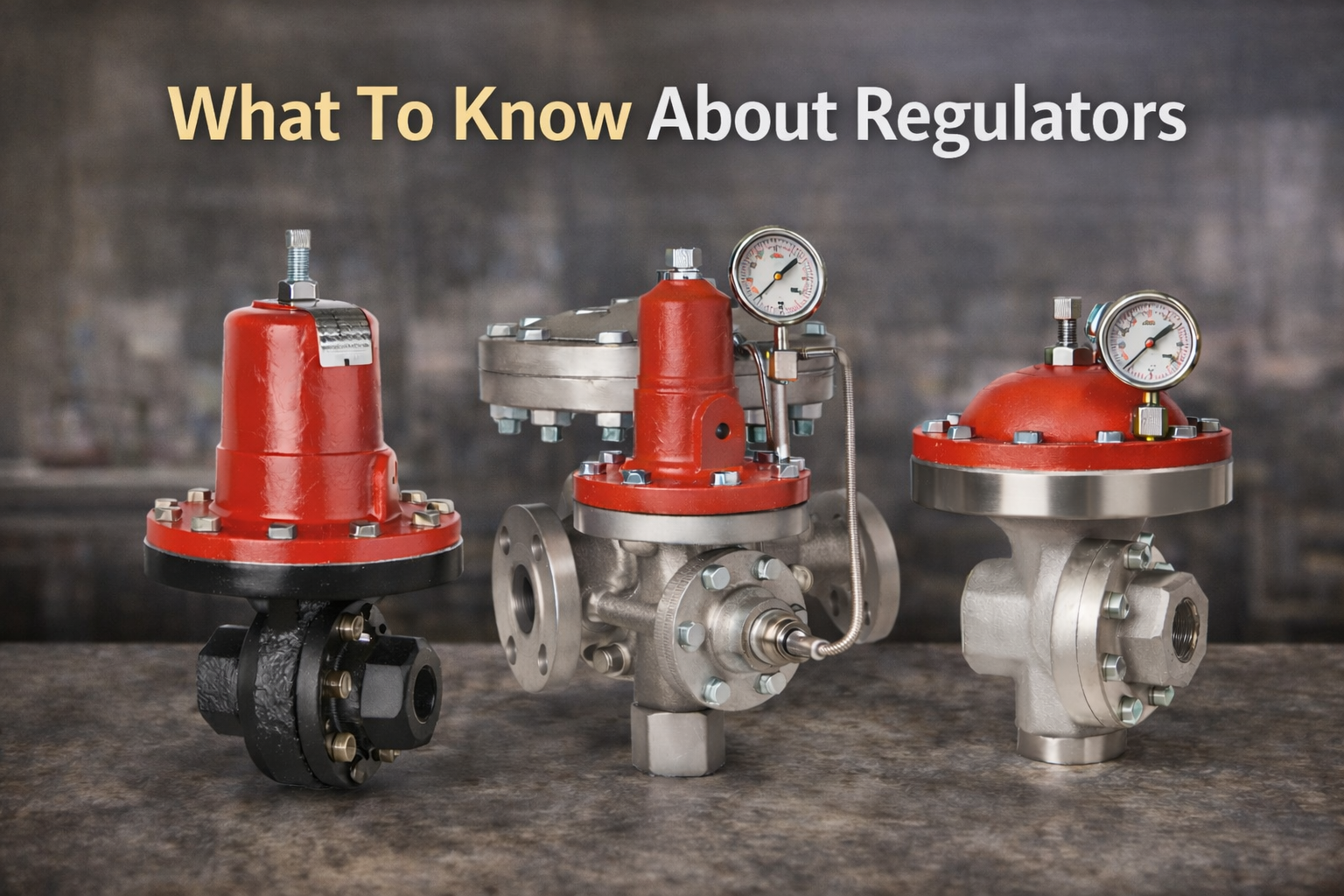
Regulators are a lot like Rodney Dangerfield, they “don’t get no respect!” How often are industrial regulators the topic of water cooler conversations? How many of you learned about regulators as part of your college curriculum? I cannot see the show of hands but have to believe it is a pretty small number, if any.
My career in the valve industry began when I first walked into a valve manufacturing facility in 1979 and, until seven years ago, all my valve experience focused on quarter turn products with a sprinkle of multi-turn rising stem valves thrown in. I knew of regulators but did not know how they operated or where they were applied.
When my formal introduction to regulators began, I was fascinated by their simple, elegant design and exceptional performance. How do they work? No electric, no air, no operator! Wow! I may be a little more enthusiastic than most, but there are some very compelling reasons to consider using a regulator for your pressure or temperature control needs.
What to know about regulators
Here are some key things you should know about industrial regulators.
How they Work
Without air, electricity, or controllers.
Accurate Regulation
This depends on the type of pressure regulator,
- Self operated
- Pilot operated
- Dome loaded
And the manufacturer’s design.
The regulator’s accurate regulation also depends on the droop, often referred to as Offset, is defined as the drop in (controlled or reduced) pressure (P2) as the valve moves from the minimum flow position to the maximum flow position. The lower the droop, the more accurate the regulation.
Also read: Droop & The Regulator Hierarchy
Tight Shutoff
Normally ANSI Class IV shutoff is acceptable as the regulator is controlling pressure and temperature and ideally operates between 30% and 70% open.
Tighter shutoff, Class VI, is a requirement in some gas applications.
ANSI Class III or IV shutoff is available in most metal seated regulators, while Class VI may be available in soft seated models.
Fast Response
This depends on stroke length. Regulators respond very quickly because they operate of the medium being controlled.
Minimum Maintenance
There are few moving parts and in some regulator designs, there are no “soft parts!”
Low Noise
Most regulator designs provide quiet operation.
This overview covers the essential things you need to know about industrial pressure regulators, helping you understand their design, operation, and advantages.