


Droop & The Regulator Hierarchy
Droop is an inherent characteristic of all self-operated and pilot-operated regulators. The term is often used when discussing the accuracy of pressure reducing valves, or PRVs.
What is Pressure Regulator Droop?
Droop in a regulator is the deviation from the setpoint as flow increases through the regulator. It is also referred to as proportional band or offset and is expressed as a percentage(%).
The inverse of droop is accuracy.
As an example, if a regulator has 20% droop, that regulator has 80% accuracy.
Accuracy is one of many important selection criteria one must consider when choosing a regulator.
Factors that Determine Droop in Pressure Regulators
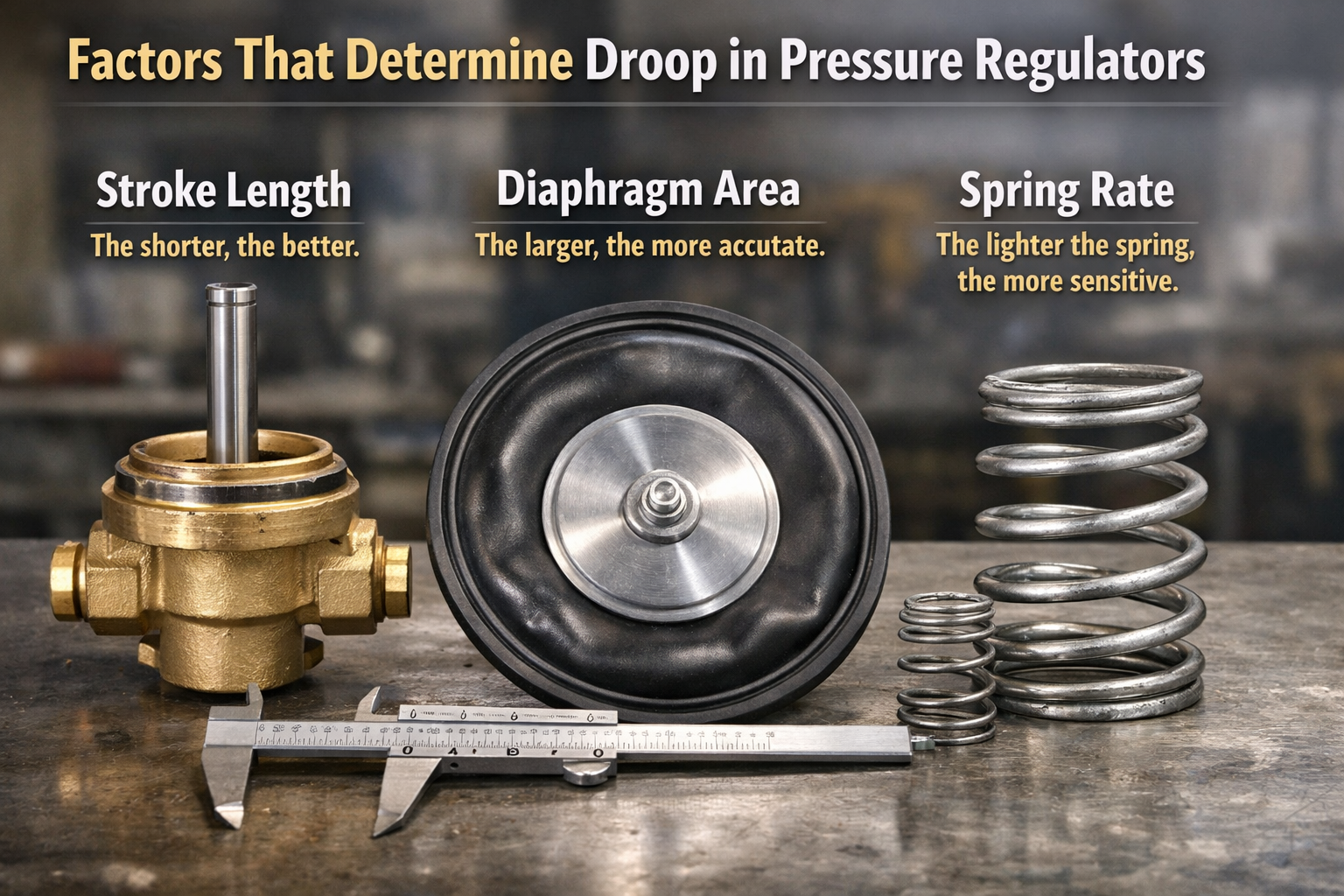
Below three variables determine regulators droop:
- Stroke Length: the shorter, the better.
- Diaphragm Area: the larger, the more accurate.
- Spring Rate: the lighter the spring, the more sensitive the regulator.
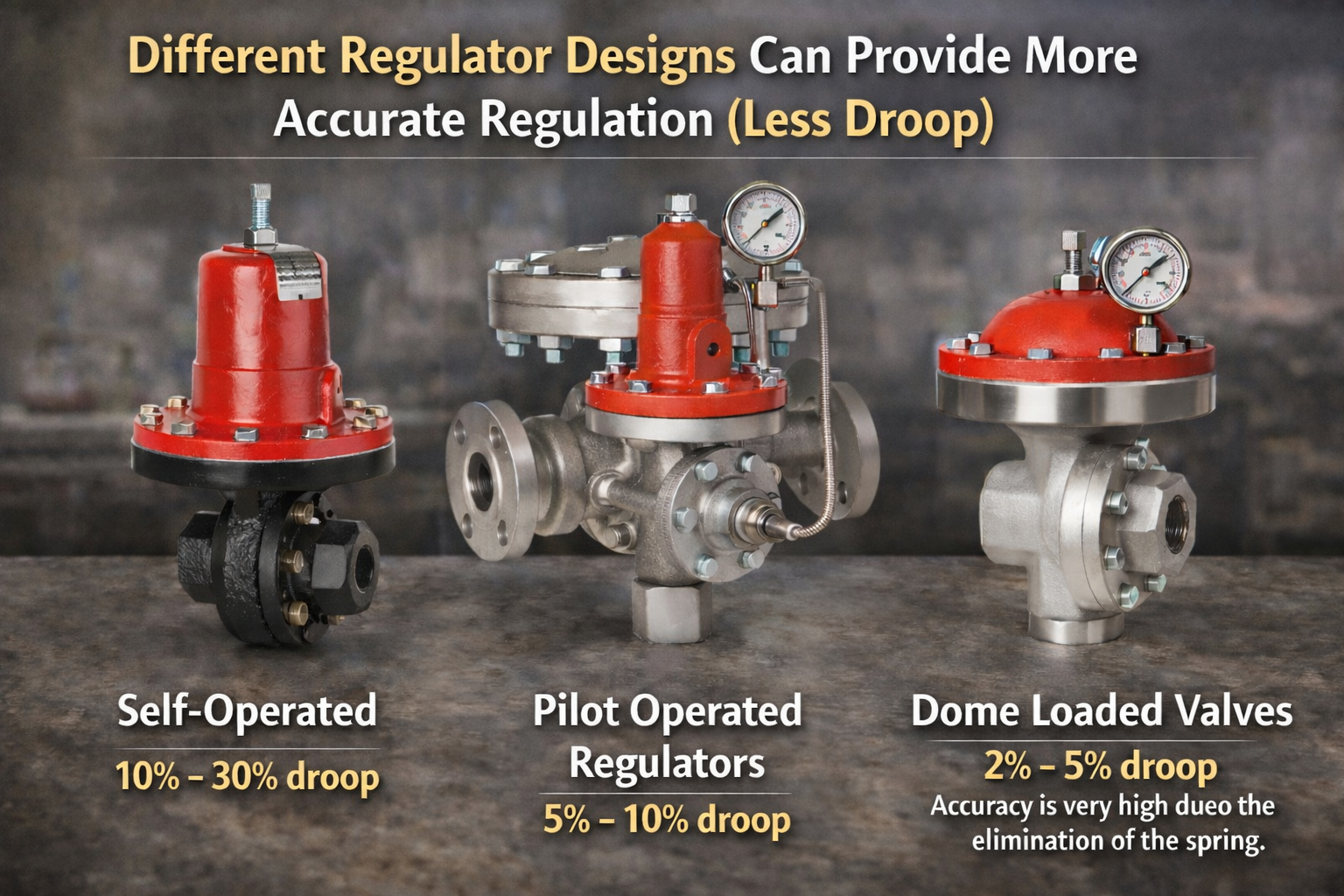
Different regulator designs can provide more accurate regulation (less droop):
- Self-operated regulators: 10% – 30% droop
- Pilot operated regulators: 5% – 10% droop
- Dome loaded valves: 2% – 5% droop. Accuracy is very high due to the elimination of the spring.
If flow demands are relatively constant, or 10-30% deviation from set point is tolerable, a self-contained regulator should be used.
If the fluctuations are great, or accuracy is essential, it may be necessary to go to pilot-operated valves or instruments.
If you are considering using a control valve to control pressure, determine if a regulator would be accurate enough for pressure reduction applications.
General Rules
- A piloted regulator has less droop than a non-piloted regulator.
- Air loaded regulators are much more accurate because the spring is eliminated. In some models, droop is virtually eliminated.
- High-flow regulators are less accurate than standard regulators.
- Typically, the shorter the overall stroke, the less the amount of Droop.
- Larger diaphragms will increase overall accuracy.
- Regulators supplying a medium to multiple users/vessels will be less accurate than regulators supplying a medium to a single unit/vessel.
- The set point should be toward the high end of the selected spring range to give increased accuracy of regulation.
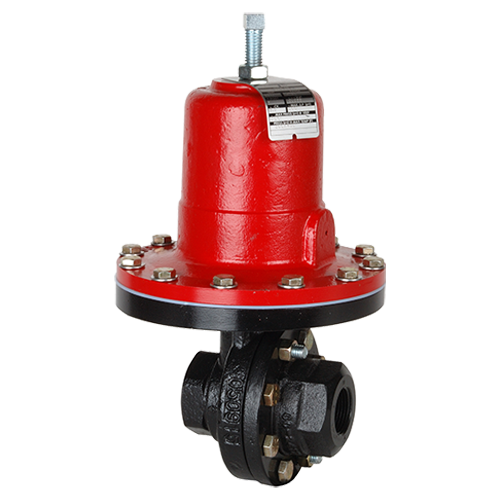 Mark 60 Series - Self-Operated Pressure Reducing Regulator
 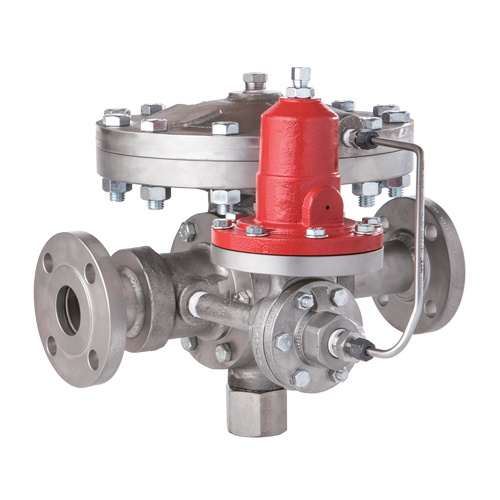 Mark 57 Series - Pilot-Operated Pressure Reducing Regulator
  Mark 56/560 Series - Dome Loaded Pressure Reducing Regulator