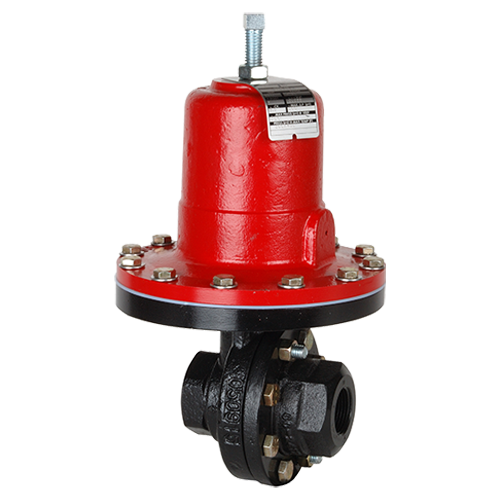
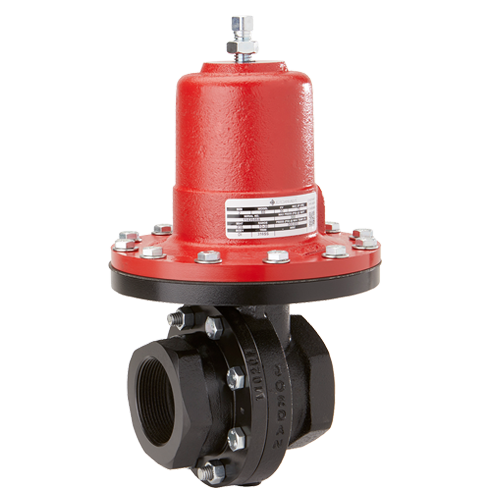
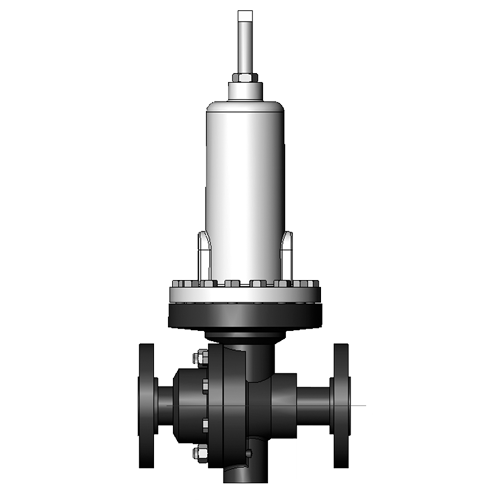
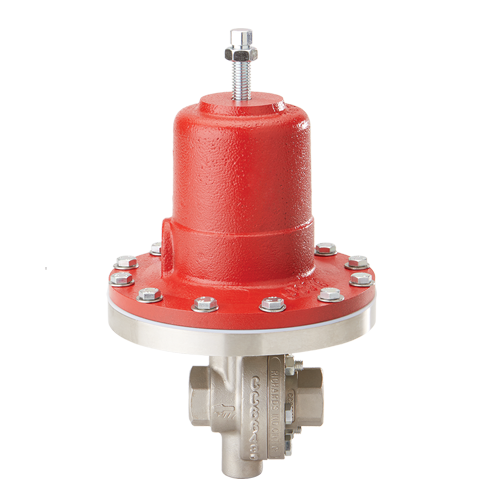
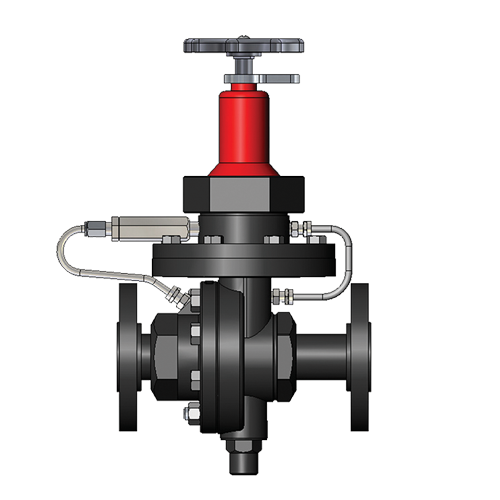
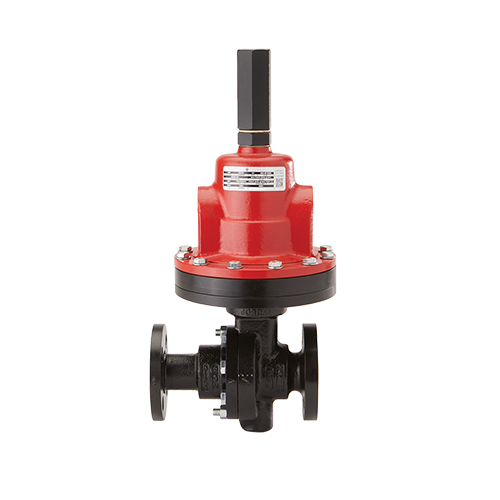
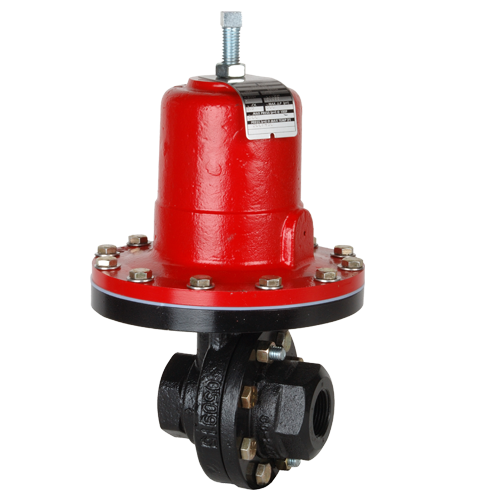
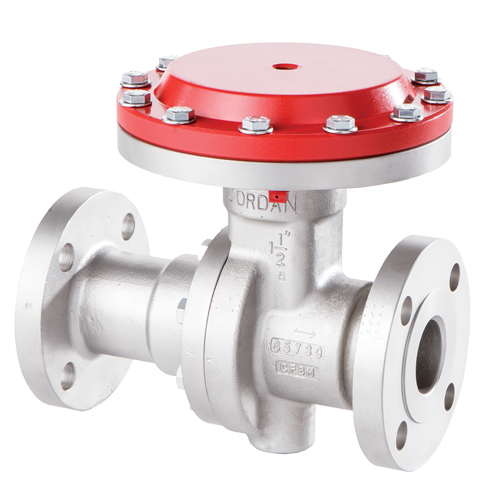
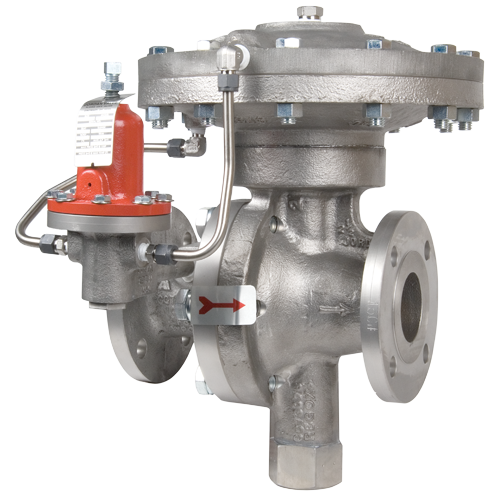
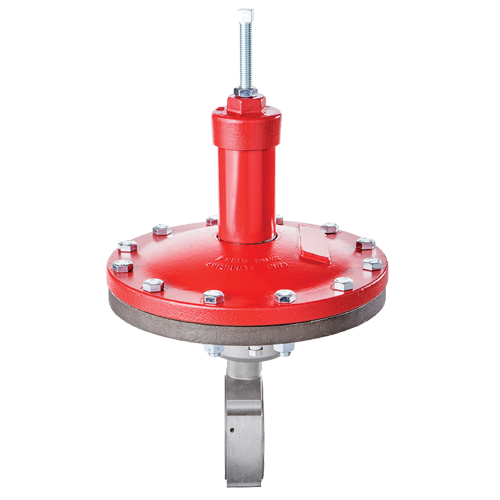
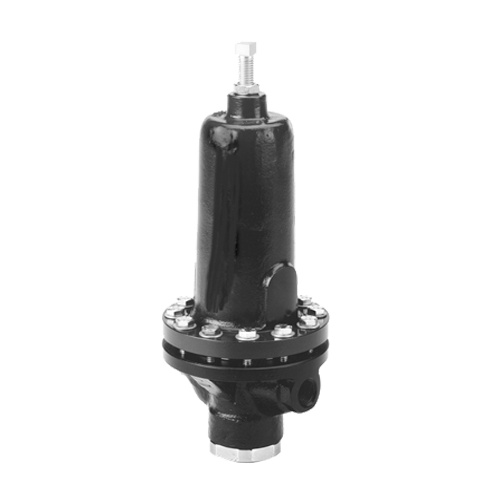
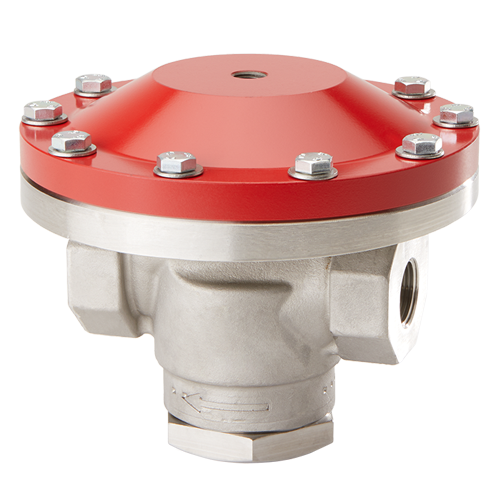
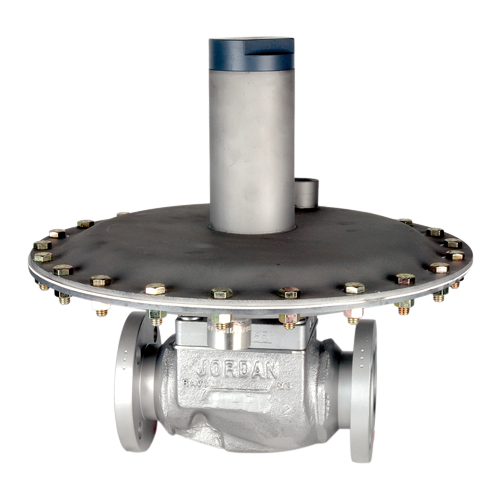
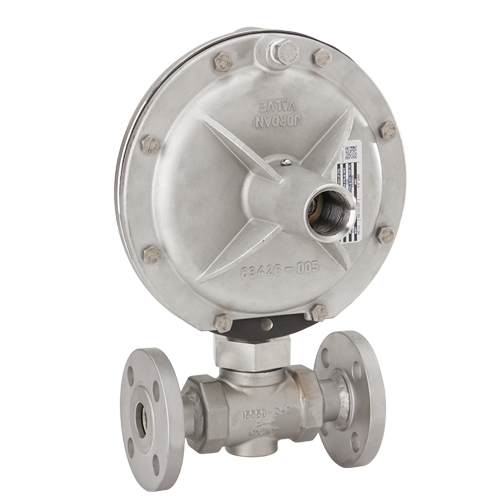
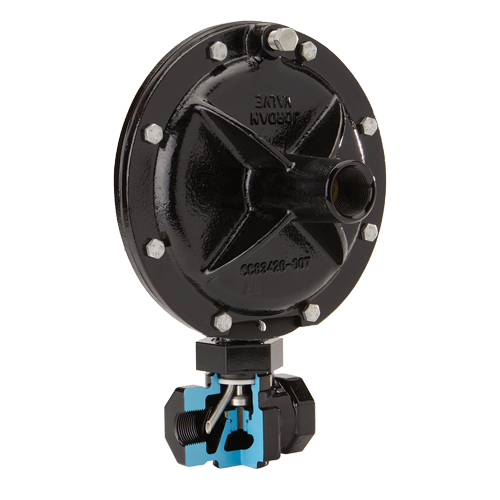
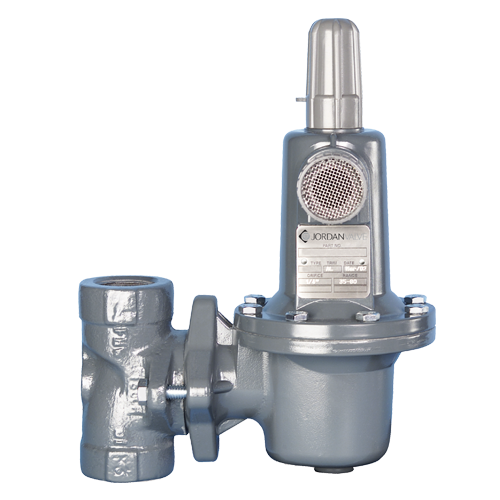
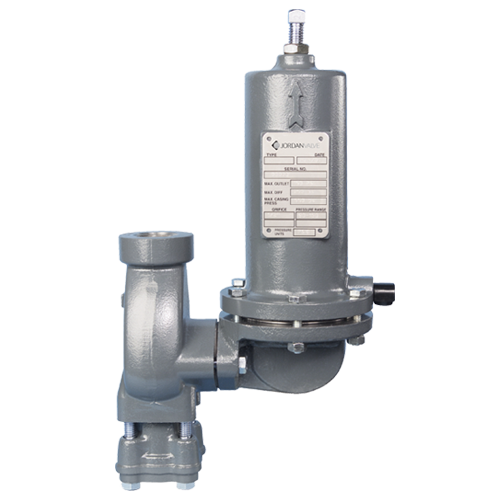
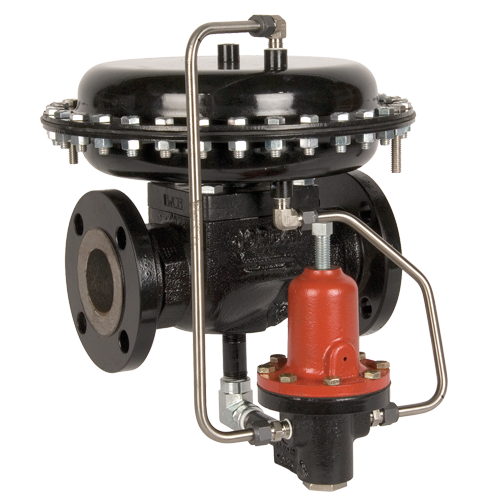
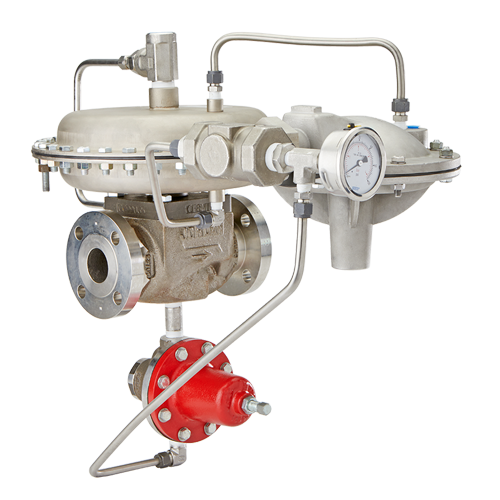
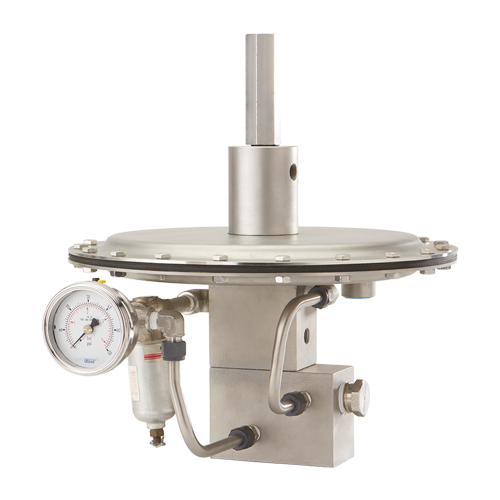
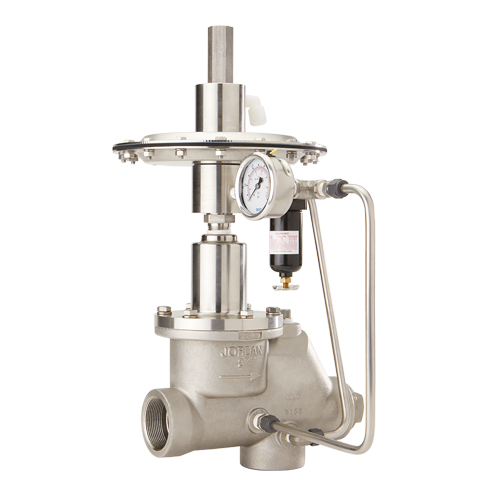
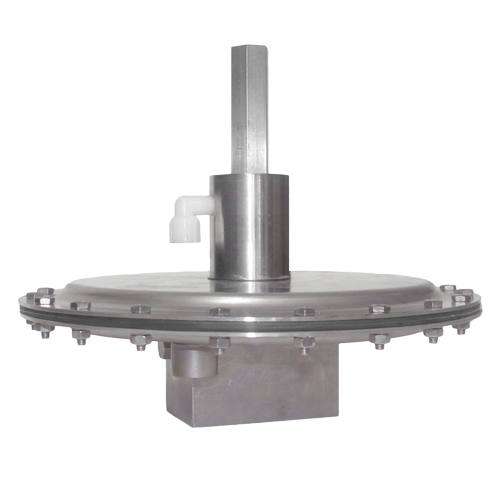
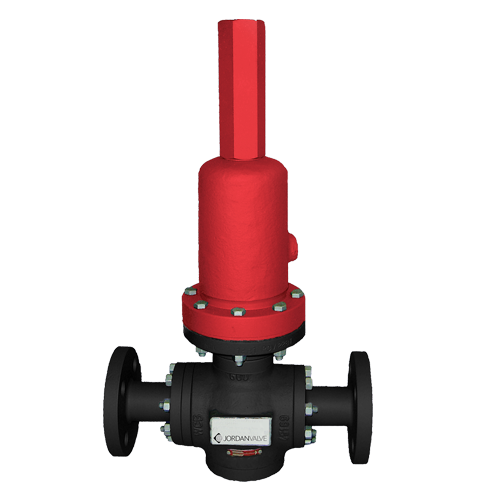
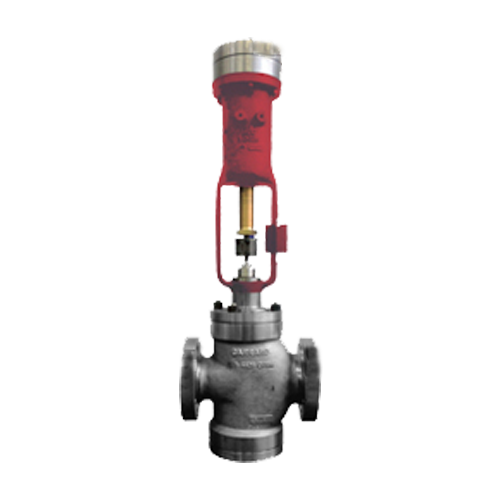
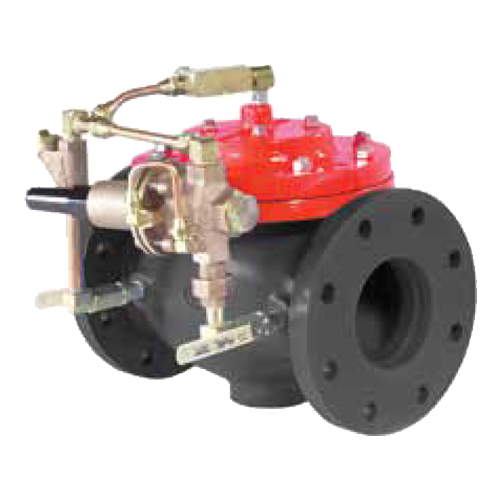
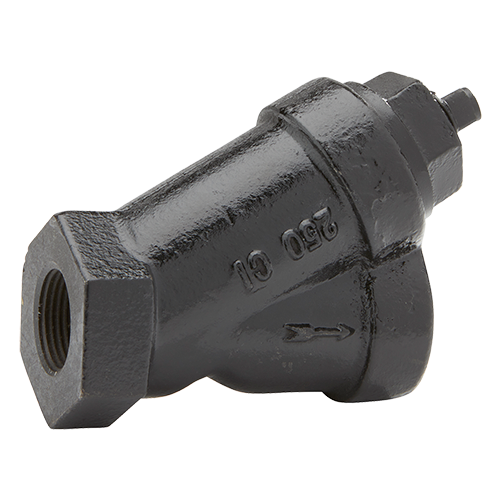
For assistance choosing the right pressure reducing regulator for your application, use our sizing software program or contact your local representative.
How Do Pressure Reducing Regulators Work?
Pressure reducing regulators monitor the downstream pressure and do not need any external power or air source to operate. Instead, they work by force balance. There are 4 main parts to a pressure regulator:
- Set screw
- Spring
- Diaphragm
- Plug
The compressed spring and diaphragm are the two opposing forces and the plug acts as the balance between the two. The set screw is used to show the regulator how much pressure we want by turning it to compress the spring. A compressed spring generates a force causing it to push down. This opens the plug and results in more flow (of water, air, or other media).
If there is a change in the controlled pressure, the diaphragm will be forced to move. For example, the pilot plug will allow upstream gas to flow under the diaphragm where the pressure is controlled by the position of the plunger. If any pressure exceeds your set point, the pressure below the diaphragm will be pushed up, closing off the pilot plug.
Benefits of Using Pressure Regulating Valves
Some benefits of using a pressure regulating valve include:
- Pressure regulators are much faster in response time because there is no need to go back to the controller.
- Regulators can respond immediately to changes in the controlled pressure.
- Regulators are usually easier to maintain and are cheaper to install.
Applications for Pressure Reducing Valves
Our sliding gate pressure reducing valves are ideal for steam, liquid and gas media applications. However, we also see use cases for the following applications:
Contact us for more information on the different applications of our pressure reducing regulators.
Frequently Asked Questions
How do I choose a pressure reducing valve?
How you choose a pressure reducing valve depends on why you need it. There are five things you need to have to choose the right pressure reducing regulator with the correct flow coefficient (Cv):
- Upstream pressure: The supply or inlet pressure going into the valve.
- Outlet/Downstream pressure: The pressure downstream of the regulator.
- Pressure differential: The difference between upstream and downstream pressure.
- Flow range: Ensures the valve is not undersized or oversized.
- Temperature
- Fluid type: Liquid, gas, or steam (including saturated vs. superheated steam).
After sizing your regulator, you’ll also need to determine the line size, material, connection type, shutoff requirements, and whether the regulator is direct-operated or pilot operated.
However, the most important factors in selecting a regulator are the flowing media, desired flow rate, and the inlet and outlet pressures.
We have sizing software available to help you accurately size a regulator.
Does a pressure regulator reduce flow?
No, a pressure reducing regulator does not reduce flow. To control flow, you will need a control valve.
What size pressure reducing valve do I need?
If you’re unsure what size pressure reducing valve you need, don’t hesitate to reach out to our experts for assistance. You can also use our sizing software to help determine the correct size.
Note: the terms “Pressure Reducing Regulators” and “Pressure Reducing Valves” are often used interchangeably.